Erin Floyd-SmithActor
Training

Training & study

Classical foundations, camera technique and the workshops in between.

Education

Degrees & conservatory
B.A., DramaUniversity of California, Irvine2016
A.A., Dramatic ArtsMiraCosta College2014
Actor’s Academy — five-week Shakespeare conservatoryMiraCosta College2013
Teachers & mentors
ActingDr. Robert Cohen, Dr. Keith Fowler, John Walcutt, Don Hill, Tracy Williams, Jane Page, Michael Mufson, Eric Bishop
Film actingJohn Walcutt
ImprovisationJoel Veenstra
MovementMichael Mufson, Craig Brauner
Career mentorshipBonnie Gillespie, Casting Director
Coursework & workshops

Where the technique came from

CHARACTER MASK WORKSHOP

Character Mask Workshop

An intensive workshop exploring the use of physical masks to develop character, access emotions, and break through personal limitations. Students work with neutral masks and character masks to discover how external transformation can unlock internal truth and expand their range of physical and emotional expression.

What it taught me

Character mask work proved to be one of the most liberating experiences in my training. The mask strips away facial expressions and forces you to find character through pure physicality—posture, gesture, and movement quality. Working with neutral mask first taught me to find a completely relaxed, present state before building character layers. The character masks then allowed me to explore personalities and emotions that felt foreign to my everyday self. This work directly enhanced my ability to transform for roles like Aunt Ruth in Marvin's Room, where physical choices were crucial to creating an authentic 70-year-old woman. The workshop taught me that character often begins with the body, not the mind, and that external transformation can unlock internal discoveries. These techniques have become fundamental to my approach to any role requiring significant physical or age transformation. The mask work also improved my awareness of how much communication happens through the body, making me a more complete physical performer both on stage and on camera.
Physical transformation, character embodiment, non-verbal communication, emotional access through physicality
FOUND OBJECT PUPPETRY WORKSHOP

Found Object Puppetry Workshop

A creative workshop exploring storytelling through improvised puppetry using everyday objects. Students learn to bring inanimate objects to life, developing skills in manipulation, voice work, and creative problem-solving while discovering how simple materials can become powerful theatrical tools.

What it taught me

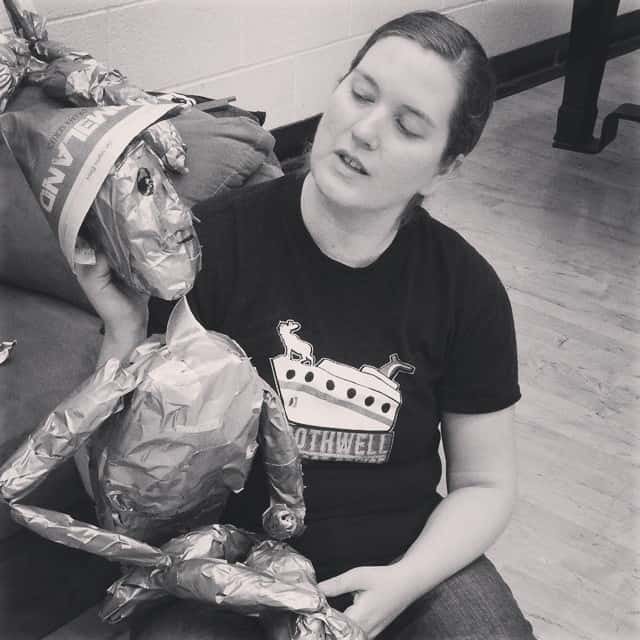
Found object puppetry challenged me to think outside traditional acting approaches and tap into pure imagination. The workshop required finding the "life" within ordinary objects—a skill that translates directly to breathing life into any character, no matter how small the role. Working with puppets taught me about precise physical control and the importance of commitment to imaginary circumstances. The voice work was particularly valuable, as different objects required completely different vocal approaches and character voices. This training proved useful during Actor's Academy when we performed the Queen Mab speech using found-object puppetry—I was already comfortable with the medium and could focus on the storytelling. The workshop also enhanced my improvisational skills and creative problem-solving abilities. Most importantly, it reminded me that acting is fundamentally about play and imagination, skills that can become buried under technique but are essential to authentic performance. This playful approach to character creation has influenced all my subsequent work.

Creative problem-solving, voice work, improvisational skills, imagination development, character creation
MOVEMENT FOR THE STAGE

Movement for the Stage

Comprehensive physical training for stage actors covering body awareness, spatial relationships, gesture, posture, and period movement. Students develop physical vocabulary, learn to use their bodies as expressive instruments, and practice movement techniques for different theatrical styles and historical periods.

What it taught me

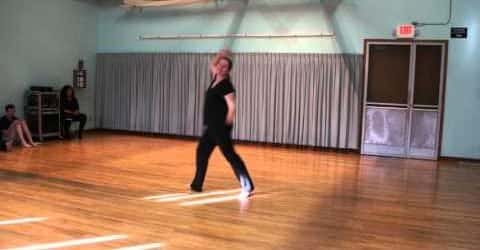
Movement training transformed my understanding of the actor's body as an instrument. Before this work, I relied heavily on emotional and intellectual preparation, but movement class taught me that the body leads and the emotions follow. Learning period movement—how people walked, sat, and gestured in different eras—became essential for roles requiring historical accuracy. The spatial awareness work improved my stage presence and helped me understand how to use the entire performance space effectively. Physical warm-ups and exercises became part of my daily routine, keeping my body flexible and responsive. This training was particularly valuable for roles like Martha Cratchit in A Christmas Carol, where period movement helped establish the character's world, and for Alice in Wonderland, where the fantastical characters required heightened physicality. The workshop also addressed stage combat basics and how to fall safely, skills I've used in various productions. Most importantly, it gave me confidence in my physical choices and helped me understand that every character has a unique relationship with their body.

Body awareness, period movement, spatial relationships, physical character development, stage presence

Voice and Diction

Technical voice training focusing on breath support, articulation, projection, and clarity. Students work on vocal exercises, diction drills, and developing the vocal stamina and flexibility required for stage performance, with emphasis on American Standard speech and regional dialect awareness.

What it taught me

Voice and diction training provided the technical foundation that supports all my performance work. Learning proper breath support not only improved my vocal power and stamina but also enhanced my emotional access—breath and emotion are intimately connected. The articulation work was crucial for Shakespeare and other classical texts, while the projection techniques allowed me to fill larger theater spaces without strain. Regional dialect awareness helped me understand the subtle vocal choices that can define character and social class. This training was particularly valuable when I later worked on various American dialects for my special skills and for roles requiring specific vocal qualities. The workshop also addressed vocal health and injury prevention, teaching sustainable techniques for long rehearsal processes and multiple performance runs. While less glamorous than scene work, this technical foundation has supported every role I've played since. Good vocal technique allows me to focus on character and emotional truth rather than worrying about whether the audience can hear and understand me.

Breath support, projection, articulation, vocal health, dialect awareness, technical vocal foundation

Shakespearean Acting Lab

Intensive workshop focused specifically on performing Shakespeare's texts. Students work on scansion, iambic pentameter, verse speaking, and finding modern emotional truth within classical language. Emphasis on making Shakespeare accessible while respecting the poetry and rhythm of the original text.

What it taught me

The Shakespearean Acting Lab built upon Dr. Cohen's Acting Shakespeare class but allowed for more experimental, hands-on exploration. Working exclusively with Shakespeare for an extended period taught me that his characters are not museum pieces—they're flesh-and-blood people dealing with universal human experiences. The scansion work, while technical, became a roadmap for discovering character psychology and emotional beats within the verse structure. Learning to trust the rhythm of iambic pentameter rather than fighting it made the language feel more natural and less forced. This intensive work prepared me for my professional experience with Shakespeare Summerfest Orange County, where I could focus on character and story rather than struggling with the technical demands of the language. The lab also emphasized ensemble work and how Shakespeare's characters exist in relationship to each other—no one performs Shakespeare alone. These skills enhanced not only my classical work but also my approach to any heightened or poetic text. The confidence I gained with Shakespeare's language has made me comfortable with challenging contemporary works that use complex or stylized dialogue.

Scansion, iambic pentameter, verse speaking, classical text analysis, ensemble Shakespeare work

Practicum of Voice and Diction

Advanced application of voice and diction techniques through practical scene work and performance. Students apply technical vocal training to actual dramatic material, working on integration of breath, voice, and character while maintaining proper vocal health and clarity under performance conditions.

What it taught me

The Voice and Diction Practicum bridged the gap between technical vocal training and real performance application. While basic voice class taught the mechanics, the practicum taught me how to maintain those techniques under the pressure of actual scene work. Working on challenging texts while maintaining breath support and clear articulation required developing muscle memory so that good vocal habits became automatic. This training was essential preparation for demanding roles that require both emotional intensity and vocal clarity—like Evelyn in Independence, where powerful emotions could easily compromise vocal technique if not properly supported. The practicum also included work on vocal characterization and how subtle changes in breath, placement, and resonance can help define different characters. Group exercises in maintaining vocal clarity during emotional scenes taught me that technical excellence and authentic emotion support rather than compete with each other. This advanced work gave me confidence that I could handle vocally demanding roles without sacrificing either technical quality or emotional truth.

Applied vocal technique, integration of voice and emotion, vocal characterization, performance stamina, professional vocal habits

Variety of Staging

Workshop exploring different theatrical staging styles and conventions from various periods and cultures. Students experience diverse approaches to space, movement, and actor-audience relationships, developing flexibility and understanding of how staging choices affect storytelling and audience experience.

What it taught me

Variety of Staging opened my eyes to the vast range of theatrical possibilities beyond naturalistic box-set realism. Experiencing different staging conventions—from Greek theater to environmental staging to immersive performance—taught me that every production makes choices about how to tell its story, and those choices profoundly affect both actor and audience experience. Working in different spatial relationships changed how I approached character interactions and helped me understand how physical space influences emotional dynamics. The workshop included work with different audience configurations (thrust, arena, environmental) and taught me to adapt my performance to serve the story regardless of the physical setup. This training proved valuable when working on productions with non-traditional staging or when performing in found spaces without formal theater setups. Understanding staging variety also enhanced my work as a director on Life Under Water, where I could make informed choices about how spatial relationships would serve the story. Most importantly, the workshop taught me that theater is endlessly flexible and that conventional approaches are just one option among many.

Spatial awareness, staging adaptation, audience relationship, environmental performance, directorial understanding

Beginning Acting / Acting 1 / Intro to Acting

Foundation acting course introducing basic techniques including improvisation, scene study, character development, and stage basics. Students learn fundamental skills of truth, objective, obstacle, and action while developing comfort and confidence in performance through exercises and scene work.

What it taught me

Beginning Acting provided the essential foundation upon which all my subsequent training built. Learning the basic vocabulary of acting—objective, obstacle, given circumstances, emotional memory—gave me tools for approaching any role systematically rather than hoping inspiration would strike. The improvisation work taught me to stay present and react truthfully to unexpected circumstances, skills that proved invaluable in both rehearsal processes and actual performance when things don't go as planned. Early scene work focused on finding genuine human connection and emotional truth, establishing habits of authenticity that continue to guide my work. While the techniques were basic, the principles were profound: acting is about being truthful under imaginary circumstances, and technique serves truth rather than replacing it. The supportive environment of beginning acting allowed me to take risks and make mistakes without judgment, building the confidence necessary for more advanced work. These foundational skills—listening, reacting, staying present, finding truth—remain central to my approach regardless of the complexity of the role or production. Every advanced technique I've learned since builds upon these fundamental principles.

Acting fundamentals, improvisation, scene study basics, truthful reaction, stage confidence, foundational technique

Theater and Dreams

Experimental workshop exploring the connection between dream logic and theatrical expression. Students investigate how dreams inform creativity, examining surreal imagery, non-linear narrative, and subconscious emotional expression as tools for innovative theatrical creation and character development.

What it taught me

Theater and Dreams was unlike any other training I'd experienced, pushing me to access creativity from unexpected sources. Working with dream logic taught me that not all theatrical truth needs to be rational or linear—sometimes emotional truth emerges through images, symbols, and associative connections rather than logical character development. The workshop challenged me to trust my subconscious and allow unexpected impulses to inform my work. This training proved particularly valuable when working on more abstract or poetic roles, like Emma in The Fly, where conventional realistic preparation wasn't sufficient. Learning to work with surreal imagery and non-rational emotional states expanded my toolkit for approaching challenging contemporary works that don't follow traditional dramatic structures. The workshop also enhanced my improvisation skills by teaching me to follow creative impulses without censoring or over-thinking. While not directly applicable to every role, this training taught me to access deeper levels of imagination and creativity. It reminded me that theater can be a space for exploring the mysteries of human experience, not just presenting realistic behavior. This work influenced my interest in directing and helped me understand how theatrical expression can transcend literal representation.

Non-linear creativity, dream logic application, surreal performance, creative improvisation, abstract character work, experimental theater techniques

Directing 1

Introduction to theatrical directing covering script analysis, concept development, working with actors, staging basics, and production collaboration. Students learn fundamental directorial skills through practical exercises and directing short scenes, developing leadership abilities and artistic vision.

What it taught me

Directing class fundamentally changed how I approach acting by forcing me to see productions from a macro perspective rather than focusing solely on my individual role. Learning to analyze scripts for overall themes, character relationships, and dramatic structure made me a more collaborative and aware actor. Understanding the director's challenges and responsibilities taught me how to be more helpful in rehearsal processes and how to ask the right questions about my character's function in the larger story. The practical experience of directing scenes gave me confidence to later direct Life Under Water and showed me that directing requires many of the same skills as acting—truthful human observation, creative problem-solving, and collaborative communication. Working with other actors as their director taught me about different learning styles and how to adapt my communication to serve each individual's process. This training also enhanced my understanding of staging, pacing, and how technical elements support storytelling. While I remain primarily focused on acting, directing experience has made me a more complete theater artist and better collaborator. Understanding both sides of the director-actor relationship has improved every subsequent rehearsal process I've been part of.

Script analysis, directorial vision, actor collaboration, staging basics, leadership skills, production overview, artistic communication

Movement for Actors

Specialized movement training designed specifically for actors, focusing on physical expression, character embodiment, and stage presence. Students develop body awareness, explore how physical choices communicate character information, and learn to use movement as a storytelling tool in dramatic work.

What it taught me

Movement for Actors went beyond basic stage movement to explore how the body can be a primary tool for character creation and emotional expression. This training taught me that every character has a unique physical signature—how they carry tension, their relationship to gravity, their spatial preferences, and their movement quality. Learning to identify and embody these physical characteristics became essential for roles requiring significant transformation, like playing 70-year-old Aunt Ruth or creating the specific physicality needed for period characters. The work on emotional embodiment showed me how feelings manifest physically and how changing physical patterns can access different emotional states. This training was particularly valuable for film work, where subtle physical choices are magnified by the camera and can communicate character information without dialogue. Group exercises in spatial relationships and physical status helped me understand how characters relate to each other through body language and positioning. The integration of movement with acting technique taught me that physical and emotional preparation are inseparable—character lives in the body, not just in the mind. This holistic approach to character creation has influenced every role I've played since.

Physical character creation, emotional embodiment, spatial awareness, movement quality, physical transformation, body-based character development

Short Form Improvisation

Fast-paced improvisational training focusing on quick-thinking games, character creation, and comedic timing. Students develop spontaneity, collaborative skills, and the ability to create entertaining content instantly while learning to support scene partners and build on given information.

What it taught me

Short form improv taught me skills that extend far beyond comedy into all areas of performance. The rapid-fire nature of improv games developed my ability to make quick, committed choices and trust my instincts rather than overthinking decisions. Learning to say "yes, and..." became fundamental not just to improv scenes but to collaborative creation in any rehearsal process. The emphasis on supporting scene partners taught me that the best performances emerge from generous, collaborative work rather than trying to steal focus or force predetermined outcomes. Working on comedic timing and finding humor in unexpected moments enhanced my ability to discover the lighter moments in dramatic roles—even in serious plays, characters often use humor to cope with difficult circumstances. The requirement to create characters instantly from minimal information strengthened my ability to make strong initial choices in auditions and first rehearsals. While different from the long-form improv I later studied, short form gave me essential foundations in spontaneity, collaboration, and creative courage. These skills proved invaluable when working on reality TV like Supreme Justice with Judge Karen, where the ability to improvise and adapt was essential for success.

Quick character creation, comedic timing, improvisational thinking, collaborative support, spontaneity, creative courage, adaptability

Intermediate Acting

Advanced scene study building upon fundamental acting techniques with more complex material and sophisticated character analysis. Students work with challenging contemporary and classical texts, developing deeper emotional access and more nuanced character development skills.

What it taught me

Intermediate Acting marked a significant step forward in my development, moving beyond basic technique to explore more psychologically complex characters and situations. Working with advanced scene study material required deeper emotional preparation and more sophisticated character analysis. The class challenged me to find subtlety and layers within characters rather than playing simple emotional states. This training was where I began to develop my specialty in maternal and caretaking characters, as the more complex material often featured women dealing with family crises and emotional challenges. Learning to work with subtext and finding what characters don't say became as important as analyzing their spoken words. The class also introduced more advanced emotional preparation techniques and taught me how to access difficult emotions safely and sustainably. Working with scene partners on complex relationship dynamics prepared me for the ensemble work required in full productions. This intermediate level training gave me confidence to audition for more challenging roles and provided the foundation for later success in demanding parts like Evelyn in Independence. The focus on truthful behavior under extreme circumstances became central to my approach to all dramatic work.

Advanced scene study, complex character analysis, emotional subtlety, subtext work, advanced emotional preparation, psychological realism
SCENIC IMPROVISATION

Scenic Improvisation

Extended improvisational work focusing on building complete scenes from minimal prompts. Students develop skills in long-form storytelling, character consistency, and collaborative narrative creation while learning to sustain dramatic tension and emotional truth through spontaneous performance.

What it taught me

Scenic improvisation bridged the gap between short-form improv games and actual dramatic scene work, teaching me to create sustained, truthful dramatic action without a script. This training required maintaining character consistency and emotional truth over extended periods while collaborating with scene partners to build compelling narratives. The work taught me to trust the creative process and allow stories to emerge organically rather than forcing predetermined outcomes. Learning to find genuine conflict and resolution through improvisation enhanced my understanding of dramatic structure and character objectives. This training proved invaluable for auditioning, where the ability to make strong choices and adapt quickly to direction is essential. The emphasis on truthful behavior within improvised circumstances strengthened my ability to stay present and reactive in scripted work—after improvising entire scenes, working with written dialogue felt like having a roadmap rather than a constraint. Scenic improv also taught me to recognize and build on dramatic opportunities as they arise, a skill that enhanced my work in rehearsal processes where creative discoveries happen through exploration rather than predetermined planning. The collaborative storytelling aspects prepared me for ensemble work and taught me how individual character choices serve the larger narrative.

Long-form improvisation, sustained character work, collaborative storytelling, dramatic structure, creative adaptation, ensemble collaboration, organic scene development

Boston Reed College Pharmacy Technician Certification

Professional certification program for pharmacy technician work, covering medical and pharmaceutical terminology, prescription processing, and healthcare industry standards.

What it taught me

While not directly related to acting, the pharmacy technician certification provided valuable skills that have enhanced my professional versatility. Learning medical and pharmaceutical terminology gave me authentic knowledge for roles requiring healthcare backgrounds or medical accuracy. The precision and attention to detail required in pharmaceutical work translated well to script analysis and character research. Understanding healthcare environments from a professional perspective has informed my portrayal of medical characters and enhanced my ability to create authentic workplace dynamics. The certification also demonstrated my commitment to developing practical skills outside of acting, showing professional reliability and diverse competencies. This training reflects my belief in Bonnie Gillespie's philosophy that "it's not the one thing you do, it's all the things you do"—developing multiple skill sets creates more opportunities and makes me a more versatile professional. The healthcare knowledge has proven useful in commercial and educational content requiring medical accuracy.

Medical terminology, pharmaceutical knowledge, healthcare industry understanding, precision and attention to detail, professional certification